By Sanni February 3, 2026
Introduction
The rice–wheat cropping system dominates large parts of North India, especially Punjab, Haryana, Uttar Pradesh, and Bihar. While this system ensures food security, it also creates one of the biggest environmental challenges in Indian agriculture—stubble burning. After rice harvest, farmers face severe time pressure to prepare fields for wheat sowing, often leading to the burning of crop residues. The Happy Seeder technology has emerged as a practical and sustainable solution to this long-standing problem. By enabling direct wheat sowing into standing rice stubble, it eliminates the need for residue burning and excessive tillage. This blog explores how the Happy Seeder is transforming wheat cultivation by improving soil health, reducing costs, and protecting the environment.
The Challenge of Stubble Burning in Wheat Cultivation
Rice straw management has always been a difficult task for farmers. Manual removal is costly, while repeated ploughing increases fuel consumption and soil degradation. As a result, residue burning became a common practice.
However, stubble burning causes:
- Severe air pollution and smog
- Loss of valuable soil nutrients
- Decline in soil organic carbon
- Health issues for humans and animals
- Increased greenhouse gas emissions
With growing environmental awareness and strict regulations, farmers urgently need an alternative that is both economically viable and environmentally safe.
What is Happy Seeder ?
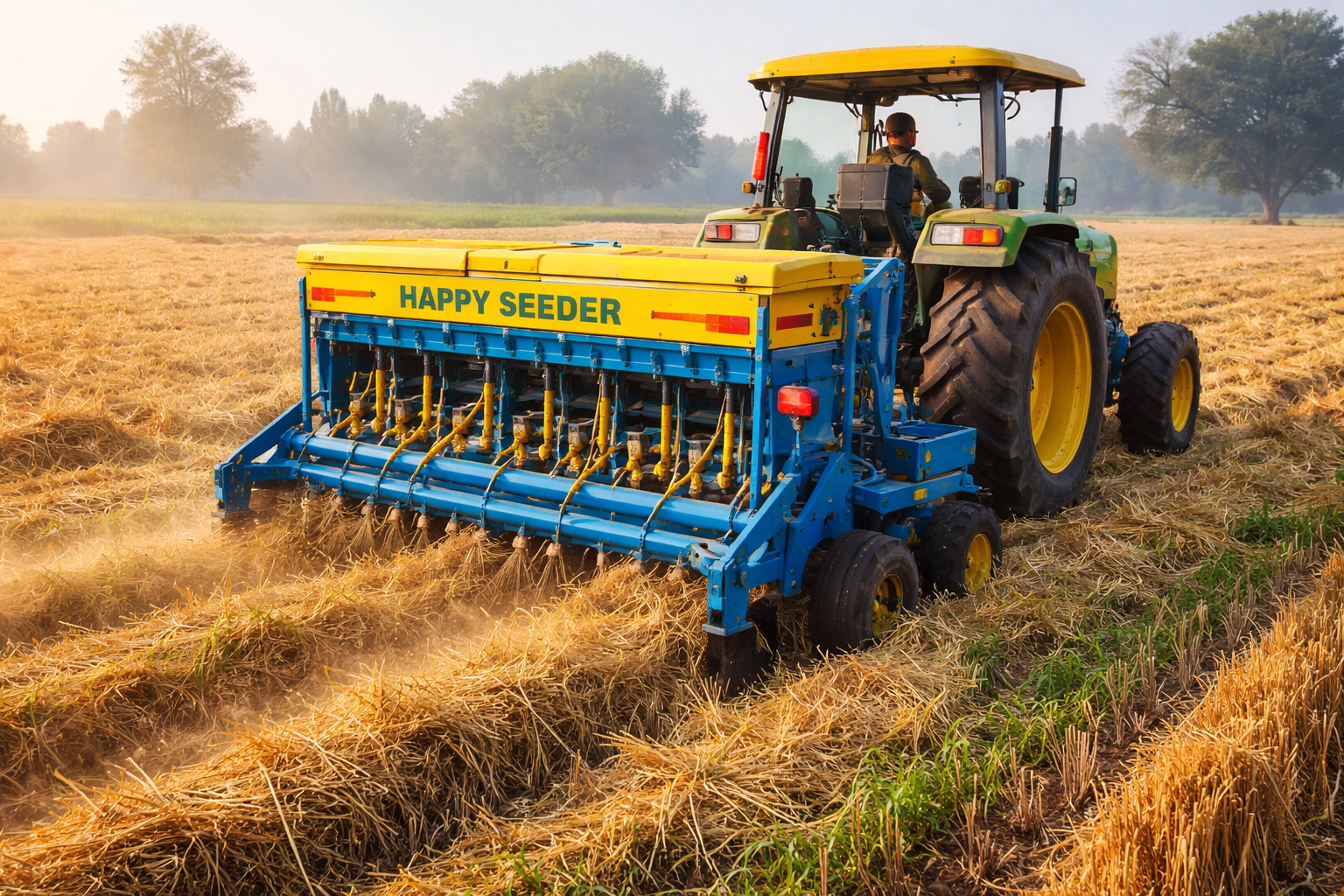
the Happy Seeder machine has emerged as a revolutionary technology that allows farmers to sow wheat without burning crop residue. Happy Seeder is not just a machine; it is a step towards sustainable,eco-friendly, and cost-effective agriculture. A Happy Seeder is an advanced agricultural implement used for direct sowing of wheat in fields with paddy residue. It cuts and manages crop residue while simultaneously placing seeds at the correct depth in a single operation. The machine is usually operated with a 45–55 HP tractor and is widely adopted in rice–wheat cropping systems, especially in North India.
How Happy Seeder Changes the Wheat Sowing Process
Conventional Method:-
- Straw removal or burning
- Multiple ploughing operations
- High fuel and labor cost
- Moisture loss from soil
Happy Seeder Method:-
- No residue burning
- No field preparation required
- Single tractor operation
- Straw retained as surface mulch
This shift significantly reduces the turnaround time between rice harvesting and wheat sowing.
Agronomic Benefits of Using Happy Seeder
1. Improved Soil Health
Retained crop residue acts as organic mulch, enhancing soil structure and increasing microbial activity. Over time, this leads to improved soil fertility and higher organic matter content.
2. Better Soil Moisture Conservation
Straw mulch reduces evaporation losses, helping maintain soil moisture for longer periods. This is especially beneficial during early wheat growth stages.
3. Weed Suppression
The mulch layer suppresses weed emergence by limiting sunlight penetration, reducing dependency on herbicides.
Impact on Wheat Growth and Yield
Several field studies have shown that wheat yields under Happy Seeder technology are comparable or superior to conventional tillage systems. Improved root development, uniform crop stand, and better nutrient availability contribute to stable yields.
Farmers often observe:
- Healthy early crop establishment
- Reduced lodging
- Improved grain quality
Economic Advantages for Farmers
From a farmer’s perspective, profitability matters as much as productivity. Happy Seeder offers multiple economic benefits:
- Reduced fuel consumption
- Lower labor requirement
- Fewer tractor operations
- Reduced irrigation cost
Lower weed management expenses
Although the initial cost of the machine is high, government subsidies and custom hiring centers make it accessible even to small and marginal farmers.
Environmental Benefits of Happy Seeder Technology
The adoption of Happy Seeder has significant positive environmental impacts:
- Complete elimination of stubble burning
- Reduction in air pollution and smog
- Lower carbon emissions
- Conservation of biodiversity in soil
Improved long-term sustainability of farming systems
By turning crop residue into a resource, this technology aligns agriculture with climate-resilient practices.
Role of Happy Seeder in Sustainable Agriculture
Sustainable agriculture aims to balance productivity, environmental protection, and economic viability. Happy Seeder fits perfectly into this framework by:
- Conserving natural resources
- Protecting soil health
- Reducing dependency on fossil fuels
- Supporting climate-smart farming
Its role becomes even more important in the context of climate change and declining soil quality.
Challenges in Adoption
Despite its advantages, adoption of Happy Seeder faces some challenges:
- High initial investment
- Requirement of skilled operation
- Limited availability in some regions
- Need for combine harvesters with Super SMS
However, increasing awareness, policy support, and farmer training programs are gradually overcoming these barriers.
Government Support and Policy Initiatives
To promote residue management technologies, governments provide:
- Subsidies on Happy Seeder purchase
- Custom Hiring Centers (CHCs)
- Training and demonstrations
- Incentives to discourage stubble burning
These initiatives are playing a crucial role in scaling up adoption.
Future Prospects of Happy Seeder Technology
As sustainable farming gains importance, the Happy Seeder is expected to become a standard practice in rice–wheat systems. Continuous improvements in machine design, affordability, and policy support will further enhance its adoption.
In the long run, this technology has the potential to:
- Improve national soil health
- Reduce agricultural pollution
- Ensure sustainable food production
Conclusion
The Happy Seeder represents more than just a machine—it symbolizes a shift toward responsible and sustainable farming. By enabling wheat cultivation without stubble burning, it addresses environmental, agronomic, and economic challenges simultaneously. Adoption of Happy Seeder technology is a crucial step toward cleaner air, healthier soils, and a more sustainable future for wheat farming.